
Our research story starts in the world
While most research institutions study the world, our faculty and students solve problems at the center of it.
They pursue discovery embedded in industries, communities, and sectors—crossing disciplines, spanning geographies, and bringing human judgment to bear on the questions that matter most.
Here’s how to tell that differentiated story.
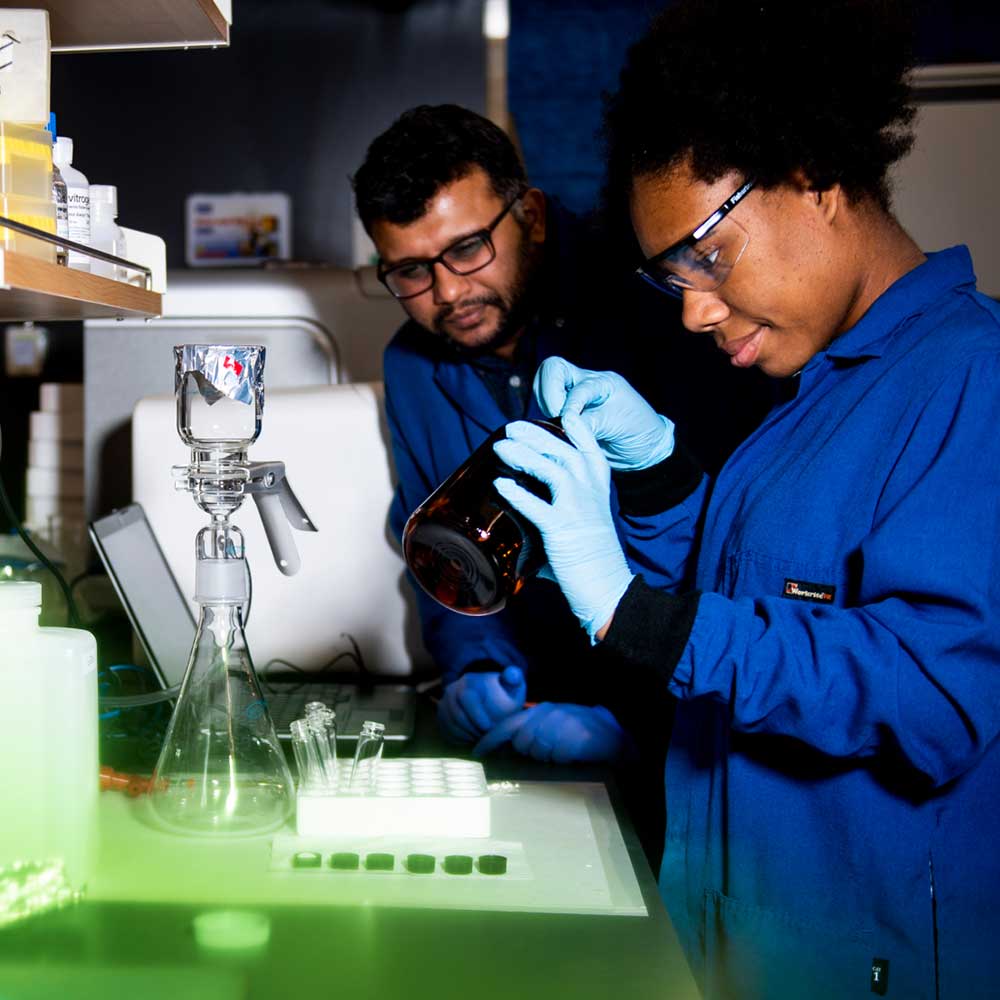
Northeastern’s official research hub
Everything you need to understand Northeastern’s global research enterprise lives on the university’s official research site.
- Northeastern’s research model and what makes it distinctive
- Our three strategic themes—health, security, and sustainability—and the areas of leadership that sit within each, including network science, network engineering, and cognitive and brain health
- The full directory of institutes and centers, with official names, descriptions, and leadership
- Faculty profiles and featured research stories
- Funding, partnerships, and sponsored research resources
How to talk about research
Frame discovery as a posture, not just a product.
Northeastern researchers are out in the world pursuing questions that others haven’t thought to ask comprehensively—or haven’t had the context to answer. Lead with the problem being explored, not just the credential of the person exploring it.
Make it human.
Avoid jargon and unnecessary complexity. Be active. Researchers discover, develop, build, challenge, advance—not conduct studies regarding. The tone should feel like the work itself: rigorous but not remote, precise but not inaccessible, confident but not boastful.
Make the so what clear.
Research communications should connect the work to its real-world stakes and impact. Who benefits? What changes? What’s possible now that wasn’t before? If the audience can’t find themselves in the story, the story isn’t finished.
Let students be agents in the story.
Northeastern’s research is not conducted in isolation from students. When featuring research, look for the undergrad in the lab, the doctoral student at the center of a breakthrough, the co-op student whose work informed a publication. This reflects our model and differentiates us.
Name the institute or center.
Northeastern’s research institutes and centers are a signal of our depth and focus. Use them. Reference them by their official names—they add specificity, credibility, and scale to research stories. Find official names and descriptions at research.northeastern.edu.
Avoid hype.
Words like groundbreaking, revolutionary, and world-changing undermine credibility when they’re not earned by the specific claim. Use them sparingly. Measured, evidence-based language paired with a concrete example is more persuasive than superlatives.
Language guidance
Audience-specific guidance
Prospective faculty
Lead with flexible, interdisciplinary environment and relevant areas of leadership. Emphasize our global infrastructure with the resources, collaborators, and institutional backing to pursue ambitious work. Showcase the depth of the institute and center ecosystem and Northeastern’s growth trajectory as an R1 university. Avoid leading with rankings; lead with possibility.
Current faculty
Frame research communications as a shared enterprise. Current faculty are contributors to the story, not just subjects of it. Highlight the ways Northeastern amplifies their work—through Northeastern Global News, cross-campus collaboration, and industry and government partnerships. When relevant, connect their work to the three strategic themes without forcing it.

Industry partners
Industry partners want to understand how Northeastern’s research connects to real-world challenges—and how quickly that knowledge can move. Emphasize the university’s model of translational research, the co-op-to-sponsored-research partnership pipeline, and the ability to engage at multiple levels, from student talent to faculty collaboration to institute partnerships.

U.S. federal funding agencies
Emphasize national impact, strategic alignment, and institutional capacity. Federal agencies—NSF, NIH, DoD, DHS, and others—want infrastructure, leadership, and a track record. Ground communications in the three strategic themes (health, security, sustainability) and connect specific areas of research leadership—network science, network engineering, cognitive and brain health, and physical AI—to agency priorities. Reference R1 as evidence of research capacity, not as an identity claim.
Non-U.S. funding agencies
Emphasize global reach and cross-border collaboration. International funding bodies respond to Northeastern’s distributed campus network as a genuine asset. Highlight the university’s established campuses in London, Vancouver, and Toronto as entry points for international partnership, and frame global research challenges (climate, health, security) through the lens of shared urgency.
Doctoral students
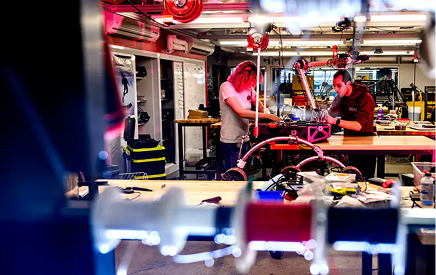
Lead with mentorship, access, and trajectory. Doctoral students are choosing an environment, not just a program. Emphasize the depth of Northeastern’s institute and center ecosystem, the availability of experiential PhD pathways that connect research to real-world application, and the range of faculty whose work spans the three strategic themes. Frame the research culture as one that pushes students toward deep discovery—not just toward a credential.

Undergraduate students
Make the research feel accessible and personal. Many undergraduates arrive expecting to engage in real research. Make it real by leading with what they’ll actually do—join a lab, work alongside faculty and leading scientists, contributing to work that matters—rather than the scope of the enterprise. Connect research to the broader experiential learning model: research at Northeastern is another way to learn by doing. Highlight pathways like co-op research placements and undergraduate research awards as concrete on-ramps.
Resources
NGN
Northeastern Global News, the primary source for research storytelling, features, and faculty profiles

NGNResearch
NGNResearch for deeper coverage on research, conferences, and faculty books, honors, and recognition

Institutional Accomplishments
Accomplishments data for research expenditures, external funding totals, and faculty hiring numbers since 2006

Naming research units
Guidelines for naming new institutes and center at brand naming policies